


Intro post:
In today’s competitive marketplace, businesses need more than a visually appealing logo or a catchy tagline to succeed. Building a strong and recognizable brand requires a combination of strategic planning and consistent brand expression. However, many businesses often confuse brand identity with brand strategy, assuming they are the same thing.
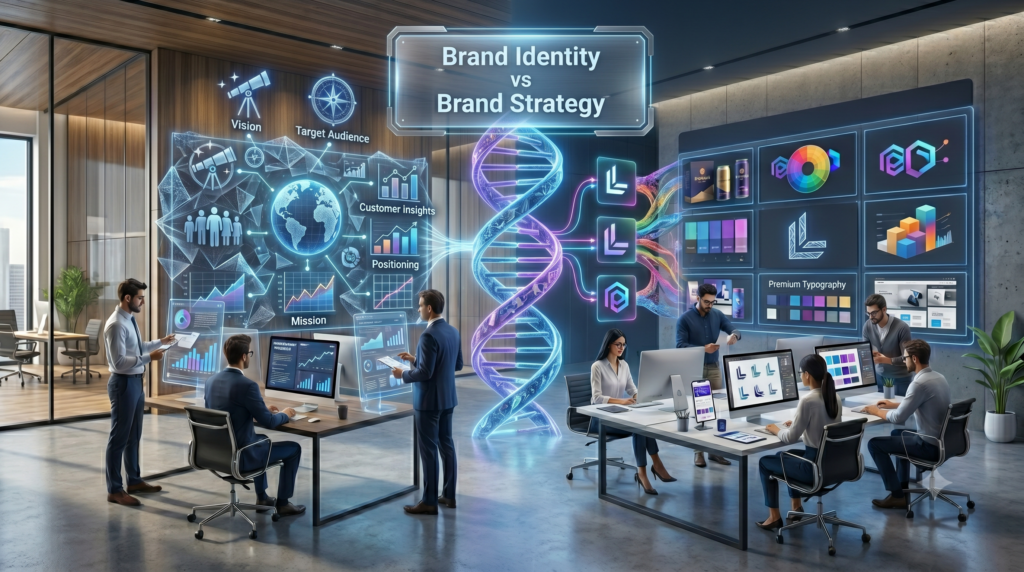
While both play a crucial role in shaping a successful brand, they serve different purposes. Understanding the difference between brand identity and brand strategy can help businesses create stronger customer connections, improve market positioning, and drive long-term growth.
At Graphicc, we specialize in STRATEGIC BRANDING AND CREATIVE DESIGN SOLUTIONS that help businesses align their vision, values, and customer experience to create impactful brands.
Understanding Brand Strategy
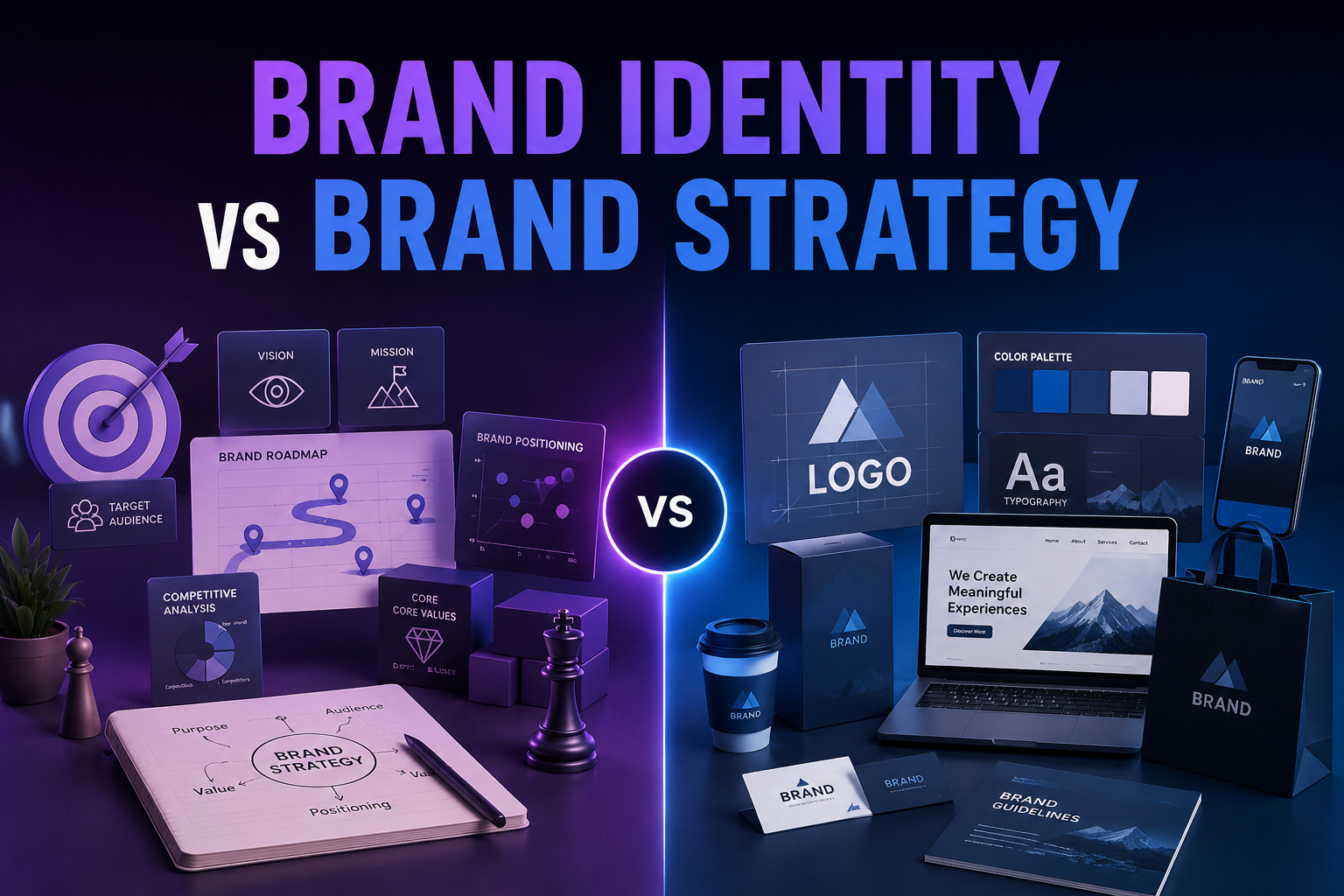
Brand strategy is the foundation of your brand. It defines the purpose, direction, and positioning of your business in the market. A well-defined brand strategy helps businesses communicate their value effectively and differentiate themselves from competitors. Think of brand strategy as the roadmap that guides every branding decision. It influences how customers perceive your business and shapes your long-term business goals.
Key Components of Brand Strategy
A strong brand strategy typically includes:
- Brand Purpose
- Vision and Mission
- Target Audience
- Brand Positioning
- Core Values
- Brand Promise
- Competitive Advantage
- Brand Messaging
These elements help businesses establish a clear direction and create meaningful relationships with their audience. Without a strong strategy, businesses often struggle with inconsistent messaging, weak market positioning, and difficulty standing out in competitive industries.
Understanding Brand Identity
While brand strategy defines the “why” behind your brand, brand identity represents the “how.” It is the visual and verbal expression of your brand that customers interact with every day. Brand identity helps customers recognize your business and form impressions about your products or services.
Key Components of Brand Identity
Brand identity includes:
- Logo Design
- Typography
- Color Palette
- Visual Style
- Brand Voice
- Packaging Design
- Website Design
- Marketing Materials
These elements work together to create a cohesive and recognizable brand experience. A strong brand identity ensures that customers can instantly identify your business across different channels and platforms.
Brand Identity vs Brand Strategy: The Key Differences
Although they are closely connected, brand identity and brand strategy serve different purposes within the branding process.
Purpose
Brand Strategy focuses on defining business goals, customer perception, and market positioning. Brand Identity focuses on visually and verbally communicating the brand to the audience.
Function
Brand Strategy acts as the foundation and direction for the brand. Brand Identity brings that strategy to life through design and communication.
Focus
Brand Strategy focuses on long-term growth and customer relationships. Brand Identity focuses on recognition, consistency, and visual communication.
Outcome
Brand Strategy helps businesses establish a competitive advantage. Brand Identity helps businesses become memorable and recognizable. Both are essential for building a successful brand. One cannot effectively function without the other.
Why Businesses Need Both Brand Strategy and Brand Identity
Some businesses invest heavily in visual design without developing a clear strategy. Others spend time creating a strategy but fail to establish a strong visual identity. Both approaches can limit business growth.
A successful brand requires:
- Clear Positioning
- Consistent Messaging
- Strong Visual Identity
- Defined Brand Values
- Customer-Focused Communication
When brand strategy and brand identity work together, businesses create stronger customer experiences and improve overall brand perception. Companies looking to build a stronger market presence can benefit from professional STRATEGIC BRANDING SERVICES that combine strategic planning with creative execution.
How Brand Strategy Shapes Brand Identity
Every element of your brand identity should be influenced by your brand strategy.For example, if your brand strategy focuses on innovation and modernity, your visual identity may include:
- Clean and minimal design
- Contemporary typography
- Modern color schemes
- Professional website experiences
Similarly, if your strategy emphasizes luxury and exclusivity, your identity should reflect sophistication through premium design elements and messaging.When strategy drives identity, businesses create more authentic and effective branding experiences.
Common Mistakes Businesses Make
Creating a Logo Before Defining Strategy
Many businesses begin branding by designing a logo without first understanding their target audience, positioning, or messaging.
Inconsistent Brand Communication
Different messaging across websites, social media platforms, and marketing materials can confuse customers and weaken brand trust.
Ignoring Customer Perception
Branding should focus on how customers perceive the business rather than how the business sees itself.
Failing to Differentiate
Without a clear strategy, businesses often struggle to stand out from competitors and communicate their unique value. To better understand how strategic branding contributes to long-term success, explore the BENEFITS OF STRATEGIC BRANDING FOR BUSINESS GROWTH and discover how strong branding can transform business performance.
The Role of Brand Identity and Brand Strategy in Business Growth
Successful brands understand that strategy and identity must work together to achieve meaningful results.
Benefits include:
- Increased Brand Recognition
- Improved Customer Trust
- Stronger Market Positioning
- Better Customer Retention
- Higher Perceived Value
- Increased Competitive Advantage
Businesses that invest in both strategic planning and visual branding are more likely to achieve sustainable growth and long-term success.
Future Trends in Branding
As consumer expectations continue to evolve, businesses must focus on creating authentic, customer-centric brands.
Key branding trends for 2026 include:
- Personalized Customer Experiences
- Purpose-Driven Branding
- Digital-First Brand Experiences
- Consistent Omnichannel Branding
- Customer-Centric Storytelling
Brands that embrace these trends while maintaining a strong strategic foundation will remain competitive in a rapidly changing marketplace.
Conclusion
Understanding the difference between brand identity and brand strategy is essential for building a successful brand. While brand strategy defines your purpose, positioning, and long-term goals, brand identity communicates those elements through visual and verbal expression. Together, they create a cohesive brand experience that builds trust, strengthens customer relationships, and drives business growth. Businesses that align strategy with identity are better equipped to stand out in competitive markets and create lasting impressions on their customers.
Contact Us
Ready to build a stronger brand that combines strategic thinking with impactful design? Our team specializes in branding, packaging design, and creative solutions that help businesses grow with confidence. CONTACT OUR BRANDING EXPERTS TODAY to discuss your branding goals and discover how we can help create a brand that delivers lasting results.

